
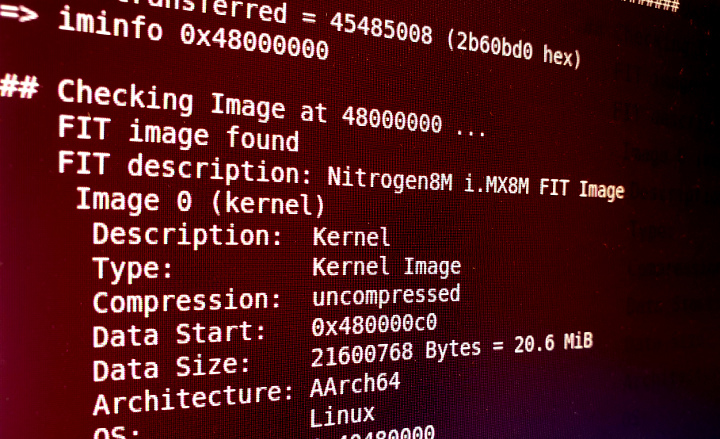
You’re probably familiar with the steps required to boot Linux from U-Boot: you first load several binaries into memory, perhaps a device tree, a kernel, maybe even an initrd. You then invoke a command such as bootm or booti with arguments providing memory addresses for the binaries you’ve just loaded. However there is a much …
Category: Yocto
Yocto Security Hardening: Security Flags

In our internet connected world, which relies on a growing volume of software – it’s crucial that new products are created with security in mind. Yet much of the software we create or depend on is written with memory-unsafe languages such as C and C++ – It’s a worrying fact given that 70% of all …
Yocto Security Hardening: CVEs

The volume and complexity of the software running in embedded devices is not only astonishing but ever increasing – yet each additional line of code has the potential to introduce a security vulnerability. An attacker may only need to exploit one single vulnerability for a bad outcome to occur. Therefore the obvious way to reduce …