

At The Good Penguin, we like to pick a charity each Xmas to raise money for. This year we’ve chosen Ronald McDonald House UK, a charity with a personal connection to one of our own penguins who stayed at one of their Houses, free of charge, for three months when their first child was born. …
Embedded Linux Conference 2026
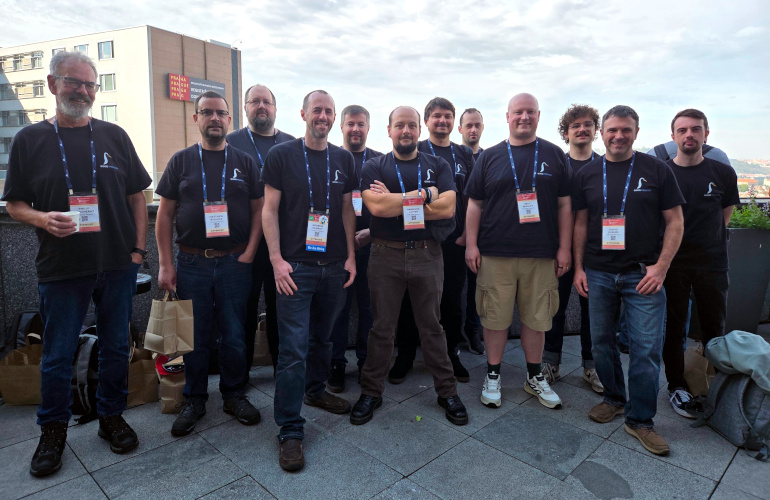
It’s important for us to keep up with the latest developments in the landscape of embedded Linux and to meet like minded people from the open source community – that’s why, last month, we sent 12 of our engineers to the Embedded Linux Conference 2026 in Prague (part of the Open Source Summit). In this …
Porting C++ to Rust by example with Yocto

Rust is an efficient system level language, in terms of performance it sits somewhere on par with C++ but lower than C. Similar to C++, it offers high level abstractions and types intended to help build system applications. Where Rust excels though is its focus on memory/thread safety and its data ownership model (enforced by …
We made Linux v6.19+ boot quicker for everyone!

Booting Linux quickly is highly desirable for embedded devices, particularly those that are battery-powered or require high availability. A common approach for reducing boot times with minimal effort is to remove unused features, effectively turning a general purpose operating system into a specialised one. However, this compromise of sacrificing features for boot time reduces flexibility …
The Good Penguin Awarded Funding to Establish a CHERI Tools and Software Hub

We’re pleased to announce that The Good Penguin has recently been awarded funding from Innovate UK to establish and operate a CHERI tools and software hub. What is CHERI? CHERI, or Capability Hardware Enhanced RISC Instructions, is an open, formally proven set of microprocessor architectural extensions that add strong, fine-grained memory-safety guarantees to existing Instruction …
Bridging the Gap: A Look at rpi-image-gen & rpi-sb-provisioner
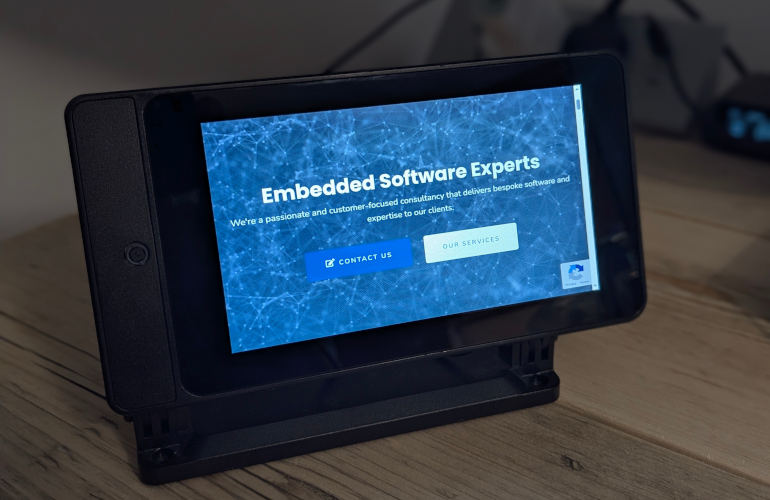
A Raspberry Pi’s low-cost and wide availability makes it a great choice for prototyping and developing embedded Linux systems. Flashing an OS, and installing the required packages to run your application code is typically just an apt install away. However, how do you take that prototype and create a clean and production-ready system? Where you …
Embedded Linux Conference 2025

Earlier this year, the Embedded Linux Conference took place in Amsterdam as part of the Linux Foundation’s Open Source Summit Europe. As is tradition, we sent most of our team – to allow us to share and absorb knowledge, as well as to network with our counterparts in the ecosystem. Read on to find read …
An Overview of DSA

Juggling switch ports and setting them up with VLAN configuration can be a difficult and time-consuming task at times. Switches use a variety of interfaces such as SPI/I2C/MDIO that can be used to access registers on the switch and control the port in order to do things such as specifying which VLAN a physical port …
Improving real-time performance with the Realtime Linux Analysis Tool (RTLA)

“Real-Time” can be defined as a system’s ability to to respond to inputs or events in a timely manner, in order to meet an imposed timing “deadline”. Failure to meet the deadline in a Hard Real-Time system is a catastrophic failure. In a Soft Real-Time system, however, occasional deadline violations are permitted, the occurrences of …
Exploring CHERI, RISC-V Linux Ecosystem

We’ve covered CHERI, and our involvement with the development of the ARM Morello yocto layer before, so for those who aren’t aware of what it is we recommend looking back through our previous blog posts on Introducing ARM Morello and CHERI, and Linux Yocto layer for the ARM Morello board, CHERI (Capability Hardware Enhanced RISC …